
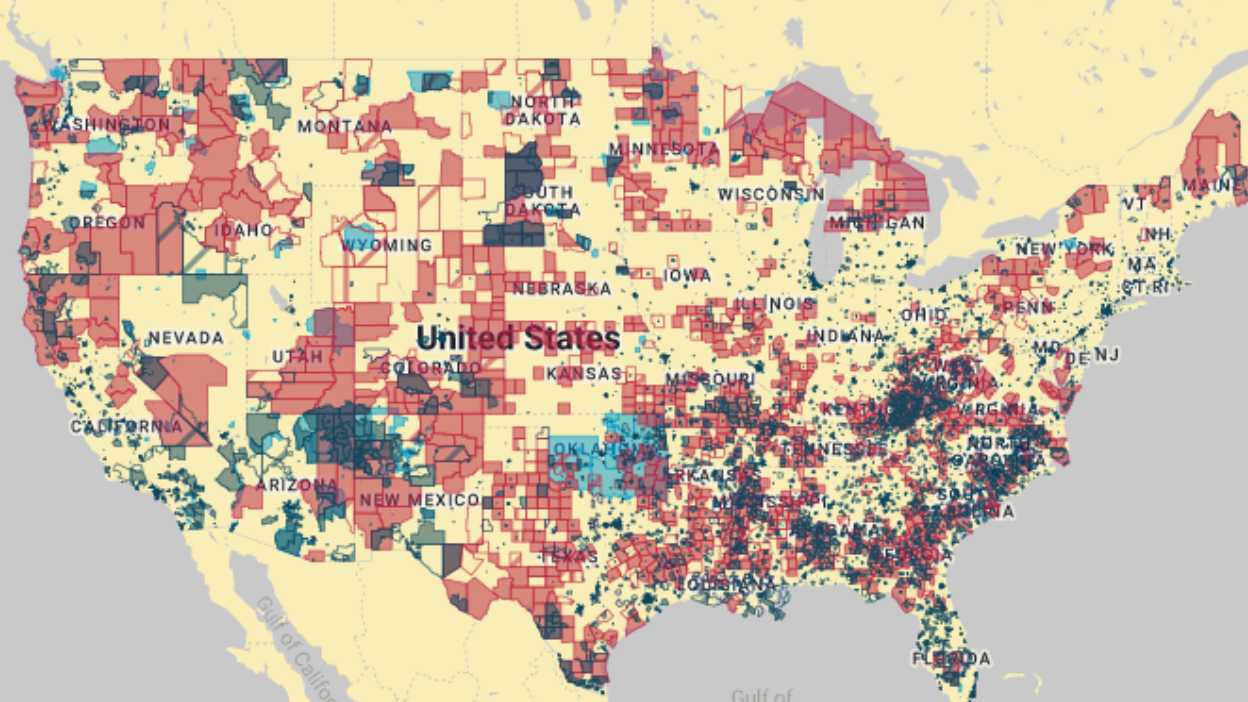

HUBZone certification is one of the few federal programs where geography is the strategy. It is designed to channel federal spend into historically underutilized communities by giving certified firms preferred access to certain contracting pathways. The question most owners ask now is simple: does the preference still translate into pipeline, or is it just another badge?
The answer is: HUBZone can still be a high-leverage certification, but only when your delivery model, hiring footprint, and capture plan are built to operationalize the rules. If your business is not prepared to manage location-based compliance, it can become a distraction.
What HUBZone unlocks on the contracting side
HUBZone shows up in federal acquisition in three practical ways.
HUBZone set-asides
Contracting officers can set aside requirements for HUBZone competition when they reasonably expect offers from at least two HUBZone firms and can award at a fair market price.
This matters because it creates a smaller competitive arena than full and open competition and often smaller than generic small business pools.
HUBZone sole-source awards
Sole-source is where HUBZone can turn into speed. Under the FAR, a contracting officer can consider a HUBZone sole-source award when they do not expect two or more HUBZone offers and other conditions are met. The anticipated price (including options) must not exceed $8.5M for manufacturing NAICS codes and $5.5M for all other NAICS codes.
These thresholds are meaningful for services firms that can deliver in the $250K to $5M range, especially for recurring operational work.
Price evaluation preference in full and open
In certain full and open competitions, the government can apply a 10% price evaluation preference mechanism for HUBZone offers.
This is not a magic wand. It is an evaluation construct that only helps when the solicitation is structured to use it and the competitive set makes it relevant. Still, it is one of the few levers that can change evaluation outcomes without changing your actual price.
Core qualifications: the non-negotiables
SBA summarizes HUBZone eligibility at a high level as requiring that the firm is a small business under SBA size standards, is at least 51% owned and controlled by eligible owners, has its principal office in a HUBZone, and has at least 35% of employees living in a HUBZone.
That 35% residency requirement is where most companies win or lose certification over time.
Employee definition that drives compliance
For HUBZone purposes, an employee generally counts if they work at least 10 hours per week during the relevant four-week lookback period, with some flexibility based on total hours and schedule justification.
Translation: compliance is payroll-based, and it is measured in a defined time window.
Principal office, remote work, and the home office question
What principal office means
The principal office is the location where the greatest number of employees at any one location perform their work.
To treat a location as the principal office, SBA expects the firm to document the location via deed or lease and to demonstrate that business is actually conducted there. Shared or coworking spaces can require proof of dedicated space and suitability for the number of employees claimed to work there.
Remote work: opportunity and risk
Remote work can help you meet HUBZone residency requirements, but it can also accidentally break your principal office alignment.
The rules also matter for employees who work at multiple locations. If an employee works at multiple locations, SBA treats the employee as working where they spend more than 50% of their time. If they do not spend more than 50% at any one location and at least one location is non-HUBZone, SBA treats them as working at a non-HUBZone location.
So remote work strategy has to be intentional. You need a defined reporting structure and time allocation that supports your principal office being the HUBZone location.
Telework sites and what SBA expects you to track
SBA’s certification platform guidance distinguishes between an office location and a telework site, and it emphasizes tracking address type and hours worked by location for each employee.
That becomes the operational backbone for compliance in a remote or hybrid firm.
Can a HUBZone headquarters be in someone’s home?
SBA does not categorically ban a home office. The real question is whether the home location can meet principal office documentation and business-operations standards and truly function as the location where the greatest number of employees work.
A home-based principal office is most defensible when the owner and any staff genuinely perform most of their work from that HUBZone location, and the firm can produce evidence on demand.
What contract opportunities are generally available to HUBZone firms
HUBZone does not create a special catalog of contracts. It changes how you compete for the same categories of requirements agencies already buy.
In practice, HUBZone is strongest where agencies buy recurring services and task orders, where requirement sizes often sit under HUBZone sole-source ceilings, and where the agency is actively working small business goals and wants simpler award paths. The lever is not the badge. The lever is making yourself the easiest compliant option for the buyer to justify a HUBZone strategy.
Mentoring: is there an effective pathway
There is not a HUBZone-only mentoring program that guarantees outcomes. But there is a proven federal mentorship infrastructure that can materially strengthen a HUBZone firm’s competitiveness.
SBA Mentor-Protégé Program
The SBA Mentor-Protégé Program is designed to help small businesses gain capacity to win government contracts, and it can be paired with joint ventures when structured correctly.
Strategic caution: structure matters. Joint venture and affiliation rules are technical, so you want legal and compliance alignment before you market the JV as a growth engine.
Costs: what it really costs
SBA does not charge a fee to apply for SBA certification programs through the official portal. Your real costs are internal and operational.
Documentation assembly and reconciliation, payroll and residency evidence, lease or facility costs if you need to establish a principal office, HR strategy changes to sustain the 35% residency ratio, and optional third-party support from consultants or counsel.
If your model is remote-heavy, expect added administrative overhead because location tracking becomes an always-on process, not a one-time application task.
Is HUBZone still worth it
HUBZone is worth it when you can reliably sustain the 35% HUBZone resident employee requirement, your principal office strategy is stable and documentable, your target agencies buy what you sell in the band where HUBZone sole-source is realistic, and you have a capture system that converts the certification into meetings, market research visibility, and bids.
HUBZone is probably not worth it when your workforce is geographically dispersed and you cannot control the residency mix, your delivery model is dominated by job sites with little office-based footprint, or you need the badge to create demand rather than to accelerate demand you already know how to generate.
Bottom line: HUBZone is still a benefit-bearing certification, but it is compliance-forward. If you treat it like a marketing credential, it underperforms. If you treat it like an operating model that unlocks faster acquisition pathways, it can be a serious differentiator.
Call to action
If you are considering HUBZone, do not start with the application. Start with the strategy.
GovCon Strategy Group can help you pressure-test whether HUBZone is a real competitive advantage for your business, or just compliance overhead. We will map your offerings to likely federal buying lanes, assess whether your workforce and office footprint can reliably sustain the 35% residency requirement, and build a practical compliance and capture plan that aligns with how you actually deliver work.
If you want clarity before you invest time and operational change, reach out to GovCon Strategy Group for a HUBZone readiness review and a go or no-go recommendation based on your goals, your team structure, and your target agencies.
Download the Contracting Value Proposition Self-Assessment at no cost when you sign up for our newsletter. Click for the opt-in link.